Advanced Agronomic Insights into Mono-Potassium Phosphite

The definitive educational portal exploring molecular structure, vascular biokinetics, and systemic defense elicitation in modern crop protection.

Explore Technical Data
Molecular Science

Chemical Composition & Structural Distinction

To truly understand the efficacy of mono-potassium phosphite, one must examine its molecular structure. While it shares similar nomenclature with traditional phosphorus fertilizers, it functions via completely different biological pathways.

Mono-Potassium Phosphite (KH2PO3) is derived from the controlled, partial neutralization of phosphorous acid (H3PO3) with potassium hydroxide (KOH). The resulting phosphite molecule contains one less oxygen atom than a standard phosphate.

This missing oxygen atom drastically alters the molecule's spatial geometry and electrical charge distribution. Consequently, plant metabolic enzymes do not recognize phosphite as a source of nutritional phosphorus. Instead, the molecule acts as a powerful systemic biostimulant and immune elicitor.

Interactive 3D Phosphite Core
Visualized: Phosphite Core (H2PO3-)
Parent Compound: Mono-Potassium Phosphite (KH2PO3)
CAS Number: 13977-65-6
Molar Mass: 120.09 g/mol
*Note: The 3D model visualizes the active disease-fighting Phosphite core. The Potassium (K+) ion is excluded from the 3D render as it rapidly dissociates in aqueous agricultural solutions.
Technical Feature / Metric Mono-Potassium Phosphite Specification
Chemical Formula KH2PO3
Anion Structure Phosphite (PO33-) - Partially Reduced state
Primary Agricultural Role Biostimulant & Systemic Defense Elicitor (SAR Activation)
Vascular Mobility Ambimobile (Bi-directional transport via Xylem & Phloem)
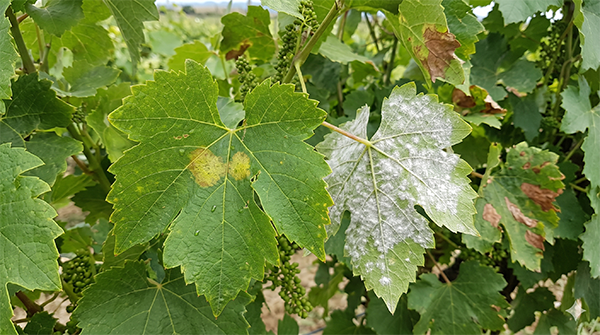
Pathogen Interaction Directly fungistatic; biochemically inhibits Oomycete growth and sporulation
Metabolic Pathway Does not participate in ATP energy transfer; triggers phytoalexin synthesis
Toxicology & Environment

Regulatory & Safety Profile

Human Health & Food Safety

Mono-potassium phosphite features an exceptionally low acute toxicity profile across oral, dermal, and inhalation exposure routes. Due to its safety, it is designated as Generally Regarded as Safe (GRAS) by the US FDA and is exempt from Maximum Residue Limit (MRL) requirements on all food commodities.

Environmental Fate

The compound is highly soluble and readily dissociates in water. It is insoluble in octanol, meaning it does not bioaccumulate in fish or wildlife. In soil matrices, the phosphite ions are taken up by roots or slowly oxidized by soil microbes into phosphate, serving as a secondary plant nutrient.

Biochemistry

Dual Mode of Action: How It Operates

Mono-potassium phosphite works via a dual pathway, making it an essential component of integrated pest management (IPM).

Direct Control

1. Direct Fungistatic Action

Phosphite ions directly penetrate the cells of targeted Oomycete pathogens (such as Phytophthora, Pythium, and downy mildews). Once inside, the phosphite alters the pathogen's internal chemistry by inhibiting oxidative phosphorylation—disrupting its energy production and severely delaying growth, sporulation, and cell-wall synthesis.

Systemic Elicitation

2. Indirect Defense Activation

When a plant absorbs mono-potassium phosphite, it perceives the molecule as a simulated pathogen attack. This triggers Systemic Acquired Resistance (SAR). The plant rapidly synthesizes phytoalexins (antimicrobial compounds), produces PR-proteins, and accumulates lignin to physically wall off the infection zone.

Xylem Translocation: Upward (Root to Leaf)
Phloem Translocation: Downward (Leaf to Root)
100% Fully Systemic input
Biokinetics

Ambimobile Vascular Mobility

Most crop protection inputs are either strictly contact-based or move solely apoplastically (upward through the xylem via transpiration currents). Mono-potassium phosphite is one of the rare compounds capable of true ambimobile transport.

Foliar Uptake (Phloem Transport): When applied as a foliar spray, the molecule breaches the leaf cuticle and enters the phloem, moving downward toward the crown and root systems alongside photosynthetic sugars.

Root Uptake (Xylem Transport): When applied via fertigation or soil drenching, it is rapidly drawn in by the root hairs, ascending via the xylem to shield new, expanding vegetative growth.

Visual Field Proof

Crop Recovery & Efficacy

Observing the activation of Systemic Acquired Resistance (SAR) under high pathogen stress environments.

Untreated Control
Crop showing signs of pathogen stress and wilting

High Pathogen Stress

  • Severe vascular wilting
  • Degraded root architecture
  • Vulnerable to secondary infections
Treated with KH2PO3
Lush, healthy crop after treatment

Systemic Resistance Activated

Independent field trials demonstrated up to 82% reduction in late blight and 76% reduction in pink rot incidence on harvested tubers.

  • Phytoalexin production halts infection
  • Rapid lateral root regeneration
  • Restored photosynthetic capacity
Physiological Impact

Key Agronomic & Physiological Benefits

Beyond crop defense, the synergy between potassium and phosphite ions drives major physiological improvements.

🌱

Advanced Root Architecture

Phosphite applications significantly increase lateral root expansion and root hair density. A more extensive root mass directly maximizes long-term nutrient and water absorption efficiency.

☀️

Abiotic Stress Mitigation

It modulates stomatal conductance and internal osmotic potential. This metabolic buffering helps agricultural crops withstand extreme heat spikes, drought, and high salinity conditions.

🍇

Yield & Quality Enhancement

The highly bioavailable potassium (K+) engine drives sugar translocation and enzyme activation, resulting in uniform fruit sizing, enhanced color, higher Brix levels, and prolonged shelf life.

Agronomic Field Rules

Application Protocols & Compatibility

⚠️ Critical Tank-Mix Incompatibility

Never combine mono-potassium phosphite with copper-based fungicides or highly alkaline chemicals. Mixing phosphite with copper triggers a chemical reaction that releases phytotoxic free-copper ions, leading to severe leaf necrosis, leaf drop, and fruit blemishes.

pH Buffering Metrics

Mono-potassium phosphite in its pure aqueous state is highly acidic (pH ~4.0). For optimal crop safety, agronomists recommend sourcing buffered liquid formulations that have been precisely stabilized to maintain a biological pH range between 6.5 and 7.2 to prevent foliar phytotoxicity.

Strategic Timing

Mono-potassium phosphite operates at peak efficiency when used as a preventative control agent rather than a curative remedy. Initiating application blocks prior to high-risk disease windows ensures full plant immunization.

Commercial Formulations & Sourcing

When selecting a mono-potassium phosphite solution for large-scale agricultural programs, selecting industrial-grade liquid formulations with verified pH stability criteria is essential for crop safety.

For large-scale commercial sourcing, specialized synthesis manufacturers such as Skylite Agrochem provide standardized, highly stable mono-potassium phosphite formulations engineered for global distribution and modern high-yield agricultural demands.